Which Hybrid Thermal Storage is best for Multi-Family Buildings?
Researchers at the Lucerne University of Applied Sciences and Arts – Engineering & Architecture show how hybrid seasonal heat storage can make buildings more sustainable. Central to this are suitable storage concepts and the use of phase-change materials (PCM).
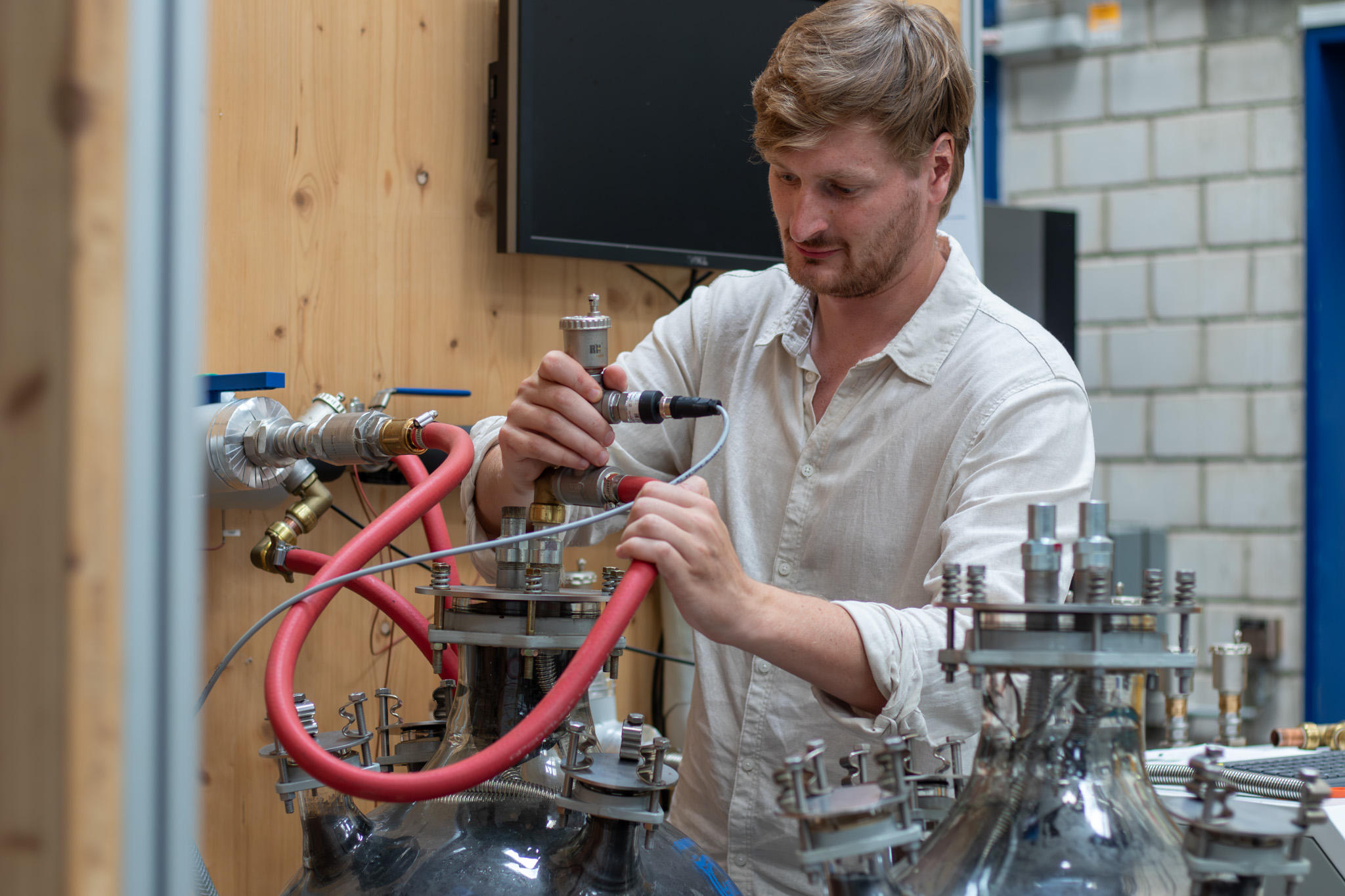
Optimized heat storage for up to 85% thermal self-sufficiency
The HyTES project investigates how seasonal heat storage systems that use water and phase-change materials (PCM) can be improved. The goal is to reduce costs, emissions and required storage volume while achieving high thermal self-sufficiency,meaning that a large share of the annual heat demand is covered on-site by the building’s own (solar) energy system.
The findings show that a building can cover up to 85 percent of its heat demand without requiring an oversized storage system. The analysis also confirms that hybrid storage systems are significantly more climate-friendly than fossil heating solutions.
HyTES combines system-wide analysis with detailed component modelling looking at both the big picture and the technical details. This leads to particularly reliable and realistic results. The study considers, among other aspects:
- Different storage concepts
- The role and dynamics of PCM capsules
- The influence of weather, load profiles and operational strategies
Comparison of the storage concepts
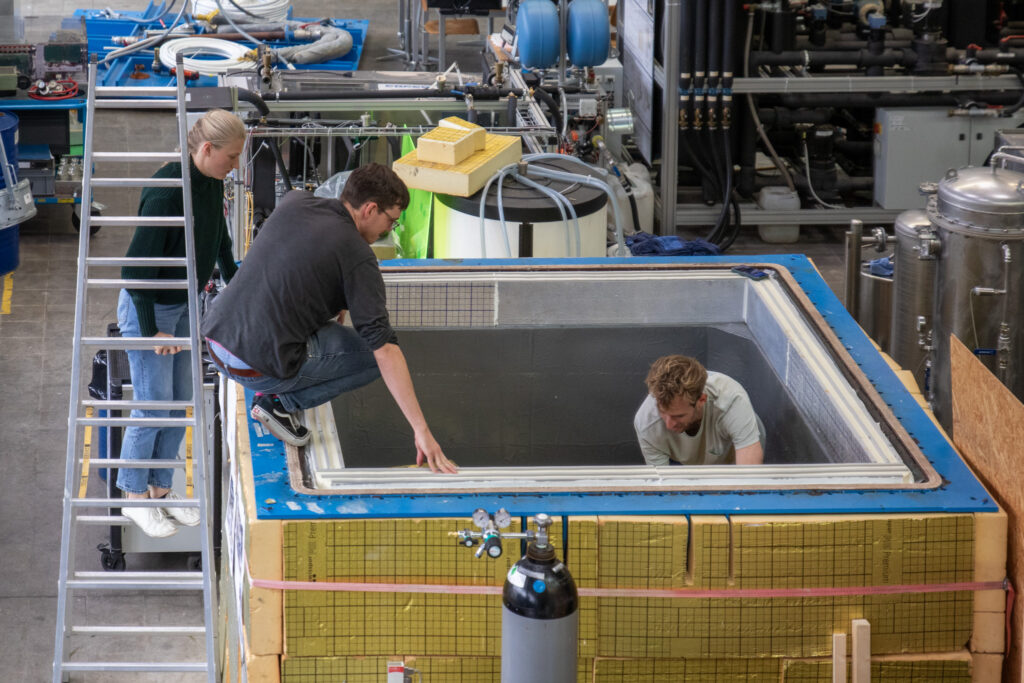
Three types of storage systems were examined: a cylindrical vacuum-insulated tank, a spherical plastic storage unit, and a rectangular repurposed basement space. All variants can integrate PCM.
- The vacuum-insulated tank offers very low heat losses but is expensive and limited by excavation depth, making it ideal for projects with limited space and high efficiency requirements.
- The plastic storage unit provides a practical compromise: moderate cost, good insulation performance, industrial availability and suitability for typical multi-family buildings aiming for medium self-sufficiency.
- The repurposed basement is particularly ecological and economical, provided that suitable building space is available. An optimal solution when basement rooms exist and low system costs are a priority.
The role of PCM in seasonal storage
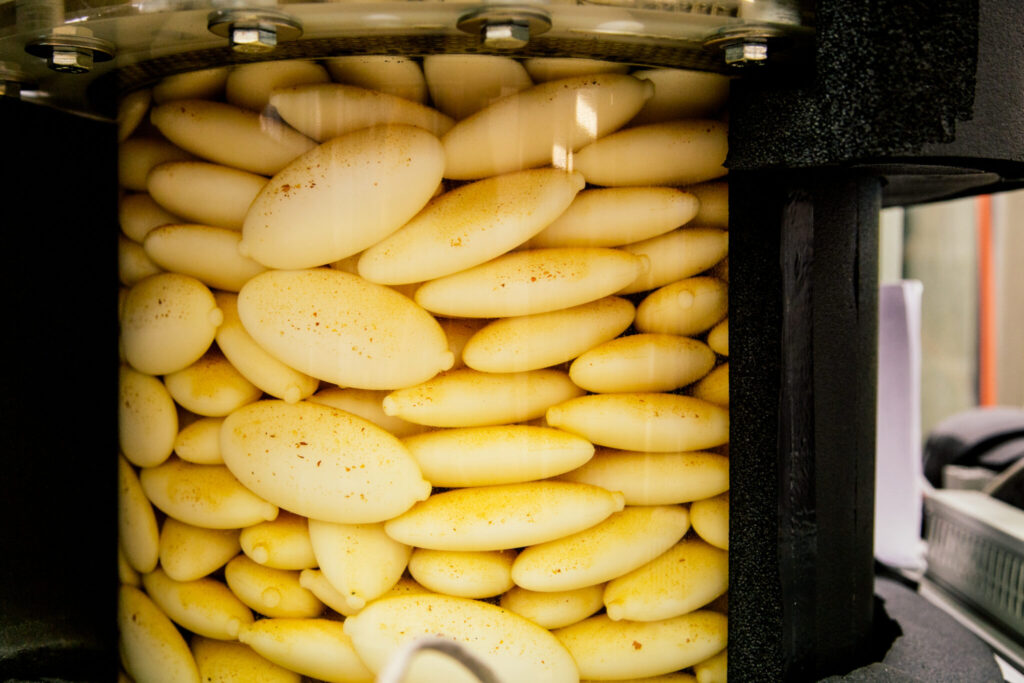
Phase-change materials (PCM) store heat by changing their physical state,similar to ice absorbing energy when melting. This allows large amounts of energy to be stored at nearly constant temperature. As a result, PCMs increase energy density and improve the thermal performance of the storage system. This enables smaller storage volumes and more stable operating temperatures.
In the HyTES project, PCM capsules of various sizes and materials were simulated. Their effect is particularly important in the upper storage layer: they stabilize temperatures, reduce losses and increase the efficiency of the building’s energy system.
Advantages of PCM at a glance
- Higher energy density with the same storage volume
- Improved stratification and temperature stability
- Low requirements for thermal output in long-term seasonal operation
Practical benefits for swiss multi-family buildings
For a typical Swiss multi-family building, seasonal thermal storage is a key component in achieving the Energy Strategy 2050 goals. HyTES demonstrates that combining PV, a heat pump and a hybrid storage system enables high levels of thermal self-sufficiency.
The project uses real load profiles and local weather data to simulate realistic scenarios. Key factors include PV area, heat pump capacity and the geometry of the storage system. When these elements are well aligned, the building uses electricity and heat efficiently and reduces dependence on the energy grid.
What this means in practice
- Multi-family buildings can cover up to 85 percent of their heat demand independently with a competitive cost to emissions ratio.
- Larger storage systems lead to exponentially higher costs, making PCM and optimization essential.
- Supportive policy frameworks remain important to promote renewable heating systems over low-cost fossil alternatives.

Comments
0 Comments
Thank you for your comment, we will analyse it.